Drag Strip captures seven classic cartoon moments directed by renowned animation legend Chuck Jones. Bugs Bunny’s elegant sophistication reflects the essence of Bugs’ feminine side. This Limited Edition Sericel is based on animation scenes in cartoons directed by Chuck Jones. Image size is approximately 14 by 33 inches.
Flintstones Animation Art Gallery, The Flintstones Most Beautiful Babies In Bedrock, Pebbles, Bamm Bamm, Hanna Barbera Animation Art Gallery, Stone Age Family
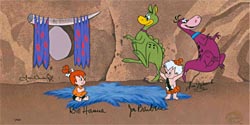
The Flintstones: The Most Beautiful Babies In Bedrock As the Flintstones and the Rubbles are set to wage a prehistoric war to see which couple has the cutest kid in town, Pebbles and Bamm-Bamm seem blissfully oblivious. From the episode by the same name, this wonderful recreation of the classic 1964 moment also features the …
Sylvester & Hippety Hop: Pop ‘Im Pop
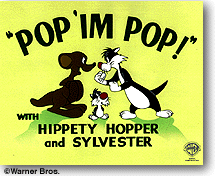
Looks like Sylvester has more than he bargained for when he attempts to take on the boxing kangaroo Hippety Hopper. This wonderful edition is the first in a series of limited edition fine art sericels which recreate the title card from classic Looney Tunes cartoons. “Pop ‘Im Pop” features Sylvester, Sylvester Jr, and Hippety Hopper …
Flintstones Animation Art Gallery, The Flintstones Animation Cels, Kingpin, Hanna Barbera Animation, Rubbles, Barney, Bowling
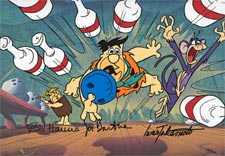
The Flintstones: Kingpin It could be strike for Fred…or maybe a gutter ball. Barney watches as Fred flies down the alley. Inspired by the hilarious hijinks of the original seriesm Iwao Takamoto created the original drawing for this edition. Prior to The Flintstones, The Ruff and Reddy Show actually launched the Hanna Barbera studio into …
Legendary Big Man
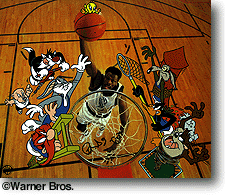
Basketball great Patrick Ewing drives to the hoop as an onslaught of Looney Tunes attempt to stop him. Neither Wile E. Coyote’s rocket, Daffy’s net, Taz’s trampoline, Yosemite Sam’s ladder, Sylvester’s pogo stick, nor Tweety’s flagrant goal tending seem to impede the legendary Big Man. Ewing is sporting the Warner Bros. home uniform as Porky …
Toon Squad Michael Jordan, Warner Bros Animation Art Gallery
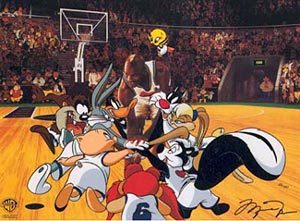
Toon Squad: Signed Michael Jordan Michael Jordan gathers the Toon Squad together for a pep talk before taking the team back to the court in ‘Space Jam’. This live action/animated film starred all your favorite Looney Tunes and legendary basketball great Michael Jordan. Very limited availability. This edition features the hand-painted cel combined with a …
Tweety And Sylvester Persona
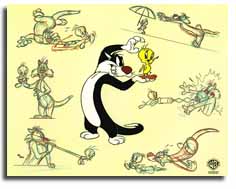
Among the most successful categories of art released by all studios, the hand-painted cel and model sheet background captures both of the key ingredients in the animation process. This edition will certainly be one of the most successful editions for Warner Bros. – it is the first in this category featuring the Tweety and …
Duck Dodgers In The 24 1/2 Century
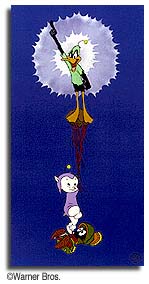
Inspired by the classic 1953 Chuck Jones Merrie Melodies cartoon “Duck Dodgers in the 24 1/2 Century, this sericel captures all of the lunacy and mayhem of the original cartoon.
Superman: The Main Man
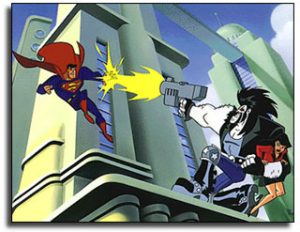
The classic Superman series has inspired the return of Superman in the new Warner Bros. animated television series. The original artwork, created by the same animation talent who worked on “Batman: The Animated Series” , was used to recreate this classic scene of The Man Of Steel flying through Metropolis with the Daily Planet building …
WBFD
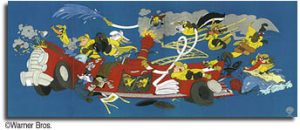
This fantastic sericel was created by Warner Bros. artist Kirk Mueller and features many of the Looney Tunes characters on their way to put out any fire, if they can put out their own first.